
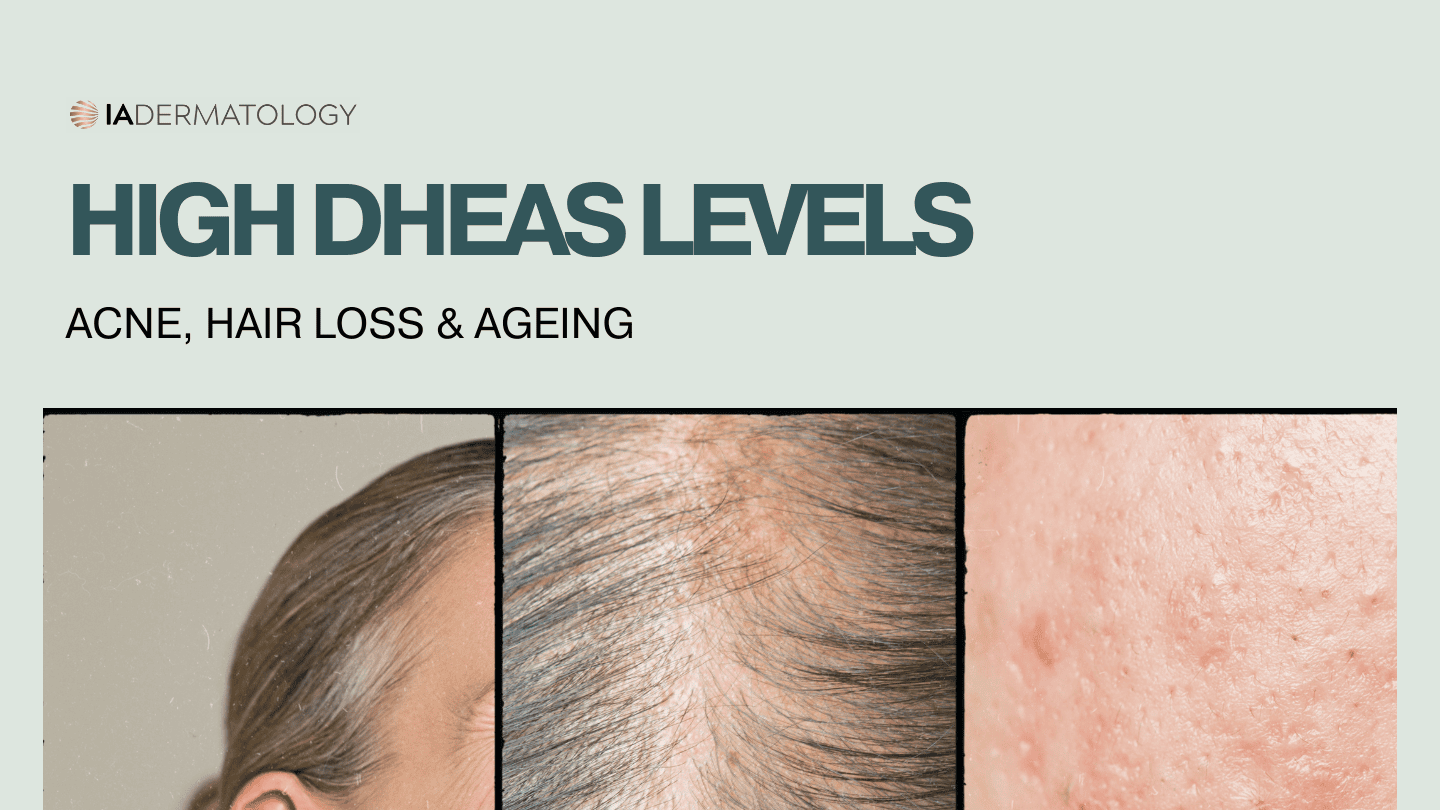
If you have persistent acne, unwanted facial hair or thinning scalp hair – and a blood test has shown a high DHEAS level – you are probably wondering two things: what does the result mean, and how can these symptoms be treated?
This guide answers both.
The most important point first: a raised DHEAS result is not a diagnosis on its own, and the acne and hair changes linked to it can usually be treated effectively.
At IA Dermatology, our Harley Street clinic in London, assessing hormone-related skin and hair conditions – and tailoring treatment for acne and female hair loss – is a core part of what we do.
Key takeaways
- A high DHEAS level does not automatically mean PCOS or that something serious is wrong.
- DHEAS is one of several androgen hormones that can contribute to acne, facial hair and scalp thinning.
- Hormone-related acne and female-pattern hair loss are usually treatable, often without needing to “normalise” the blood result itself.
- A dermatologist can identify what is actually driving your symptoms and build a treatment plan around them.
- Rapidly progressing symptoms or a markedly raised result should be assessed promptly.
Can acne linked to high DHEAS be treated?
Yes. Hormone-related acne is one of the most common conditions we treat, and it responds well to the right approach.
DHEAS and other androgens can increase activity in the skin’s oil-producing (sebaceous) glands, which contributes to breakouts – particularly persistent adult female acne along the jawline, chin and lower face. But acne is rarely caused by one hormone alone.
Genetics, skin sensitivity, inflammation, skincare products and other hormonal factors all play a part, which is why our acne treatment in London is tailored to the individual rather than to a single blood result.
Depending on your skin, medical history and whether you are planning a pregnancy, hormonal acne treatment may include:
- topical treatments to reduce oil, unclog pores and calm inflammation
- oral medication where acne is more widespread or scarring
- treatments that reduce the effect of androgens on the skin
- a longer-term maintenance plan to keep skin clear and prevent scarring
Where the acne is linked to polycystic ovary syndrome, we treat it as part of our wider PCOS-related skin and hair care. The aim is always to clear the acne effectively while deciding whether the hormone result needs any further investigation. If you are dealing with stubborn or recurring breakouts, a dermatologist assessment is usually the fastest route to a plan that works.
Can hair loss linked to high DHEAS be treated?
In many cases, yes – and earlier assessment generally gives better results.
Higher androgen activity can contribute to female-pattern hair loss in women whose scalp follicles are hormonally sensitive. This typically shows as gradual thinning across the top of the scalp or a widening parting, rather than distinct bald patches.
A high DHEAS result does not prove that hormones are the cause. Female hair loss is frequently driven or worsened by other factors – iron deficiency, thyroid disease, nutritional issues, recent illness, certain medications, menopause and genetic hair loss – and these often need to be assessed and addressed alongside any hormonal contribution. This is exactly why a proper dermatological work-up matters before starting treatment.
Our treatment for female-pattern hair loss is tailored to the pattern, cause and stage of thinning, and may involve:
- correcting any underlying deficiencies or medical contributors
- topical and oral treatments to support regrowth and slow progression
- treatments aimed at reducing androgen activity where appropriate
- in-clinic regenerative options and ongoing monitoring of progress
Because hair responds slowly, the earlier thinning is assessed, the more can usually be preserved. A dermatologist can confirm whether your DHEAS result is clinically relevant to your hair loss and recommend the most suitable options.
Can unwanted facial or body hair be treated?
Yes. Coarse facial or body hair driven by androgens – known medically as hirsutism – is common and manageable. It often affects the upper lip, chin and jawline, chest, lower abdomen, inner thighs and lower back.
The amount of hair growth does not always match the blood-test result, because genetics, ethnicity and follicle sensitivity all matter. Treatment may combine measures that reduce androgen activity with hair-reduction options, and is planned around your symptoms and medical history. Where hirsutism forms part of PCOS, we manage it within our PCOS hormonal skin and hair service.
What is DHEAS?
DHEAS stands for dehydroepiandrosterone sulphate, sometimes written as DHEA-S. It is an androgen hormone produced mainly by the adrenal glands – small glands that sit above the kidneys — and it acts partly as a building block the body uses to make other hormones, including testosterone and oestrogen.
Because DHEAS stays relatively stable in the bloodstream, it can be a useful test when investigating signs of increased androgen activity.
What does a high DHEAS level mean in a woman?
A high DHEAS level means the amount of this adrenal androgen in the blood is above the laboratory’s expected range. On its own it does not provide a diagnosis. A raised result can occur in women with PCOS, but it can also have other explanations, and some women have a mildly elevated level without any significant underlying condition.
The degree of elevation matters. A slightly raised result is interpreted very differently from a level that is markedly above the reference range.
What symptoms can high DHEAS cause?
Higher androgen activity may affect the skin, sebaceous glands and hair follicles. Possible symptoms include:
- acne, particularly persistent or adult female acne
- oily skin
- increased facial or body hair
- female-pattern scalp hair thinning
- irregular or absent periods
Not everyone with a raised DHEAS level develops these symptoms. Some women have significant acne or facial hair despite hormone results within the laboratory range; others have a mildly raised result but few noticeable symptoms. This is because skin and hair follicles vary in how sensitive they are to androgens — and it is why treatment is directed at the symptoms, not just the number.
Does high DHEAS mean PCOS?
No. A high DHEAS result does not automatically mean you have PCOS.
PCOS is diagnosed from a combination of features, which may include:
- irregular or absent periods
- clinical signs of increased androgen activity
- raised androgen levels on blood testing
- polycystic ovarian appearances, where relevant
- exclusion of other possible causes
Total and free testosterone are generally the main blood tests used to assess biochemical androgen excess in suspected PCOS; DHEAS can add information, particularly when testosterone is not elevated. So it is entirely possible to have PCOS with a normal DHEAS level, a raised DHEAS level without PCOS, or androgen-related skin symptoms with blood tests in range. The result needs to be read as part of a wider hormonal assessment — the approach we take in our PCOS-related skin and hair clinic.
Why does age affect DHEAS results?
DHEAS levels rise through childhood and puberty, peak in early adulthood and then gradually decline with age. A result that is expected in a woman in her twenties may be unusually high in a woman in her forties or fifties, so DHEAS should always be assessed against an age-appropriate reference range. A result should never be labelled simply “high” without this context.
What causes high DHEAS in women?
Possible explanations include PCOS, normal individual variation, medications or supplements containing DHEA or androgenic hormones, non-classic congenital adrenal hyperplasia, adrenal hormone disorders and – less commonly – an androgen-producing adrenal or ovarian condition. A mildly elevated result is far more common than a serious androgen-producing disorder, and the pattern and speed of symptoms help determine whether further investigation is needed.
When should high DHEAS be investigated further?
Further assessment is particularly important when:
- the DHEAS level is markedly above the reference range
- symptoms have appeared or progressed rapidly
- facial or body hair has increased suddenly
- acne has become severe over a short period
- scalp hair loss is progressing quickly
- the voice has become deeper
- periods have become significantly irregular or stopped
- there are other signs of pronounced androgen excess
Rapidly progressing symptoms or signs of virilisation warrant prompt medical assessment. Your doctor may repeat the DHEAS test and arrange others – such as testosterone, sex hormone-binding globulin, androstenedione, 17-hydroxyprogesterone or thyroid tests – depending on your history.
Is high DHEAS dangerous?
A mildly raised DHEAS result is not usually dangerous by itself. What matters is how elevated the result is, whether symptoms are present, how quickly they developed, and whether other hormone results are abnormal. A raised result should be assessed rather than ignored – but it is equally important not to assume the worst from a single blood test.
Is high DHEAS always bad?
DHEAS is not simply an “acne hormone.” It has several normal roles in the body, and researchers have studied possible links with bone, muscle, mood and cognitive function. These associations do not prove a high level is beneficial. DHEA supplements have not been shown to give reliable anti-ageing benefits, can cause androgen-related side effects, and should not be started simply because DHEAS naturally falls with age.
How treatment is planned at IA Dermatology
The hormone level and the skin or hair symptoms do not always need to be treated in the same way. Our approach is to treat the visible condition effectively while deciding whether the hormone result needs further work-up. Treatment is tailored to:
- your main symptom and its severity
- your age and medical history
- whether pregnancy is being considered
- your menstrual cycle
- the results of any hormonal investigations
- previous treatments you have tried
Where further hormonal assessment is needed, we work alongside your GP, gynaecologist or endocrinologist, so your skin and hair are treated without delay while any underlying cause is investigated.
Frequently asked questions
The key points
- A high DHEAS result is not a diagnosis by itself.
- DHEAS can be associated with acne, facial hair and scalp hair thinning.
- A raised level does not automatically mean PCOS.
- Results must be read against an age-appropriate reference range.
- Most associated acne and hair concerns can be treated.
- Markedly raised results or rapidly progressing symptoms need prompt assessment.
Speak to a specialist about treatment
If you have acne, unwanted facial hair, scalp thinning or an unexpected DHEAS result, a dermatologist with expertise in hormonal skin and hair conditions can assess whether your symptoms are androgen-related, rule out other causes and recommend a treatment plan built around you. Our clinic is on Harley Street, London (16 Devonshire Street, W1G 7AF).
Get Started with Recovery Journey
Discover personalised care and expert guidance to restore your confidence and hair health with elegance and precision.
“I’m really really pleased with my treatment with Dr Ali. I first came through a word of mouth recommendation from a family friend and it was the best investment into my skin that I could have ever made! I used to struggle with repeated breakouts/ acne on my back and face and a super congested and inflamed dermal layer and 9 months on my skin has been transformed (although I started seeing results really quickly at 2 months!). Really recommend Dr Aisha as a dermatologist she’s fantastic and professional.”
✅ Verified Patient Review from Doctify
Visited for Skin Treatment
This article provides general medical information and is not a substitute for an individual consultation or diagnosis.
Medical references
- International Evidence-based Guideline for the Assessment and Management of Polycystic Ovary Syndrome, 2023.
- Endocrine Society Clinical Practice Guideline: Evaluation and Treatment of Hirsutism in Premenopausal Women.
- Mayo Clinic Laboratories: Dehydroepiandrosterone Sulphate, Serum — clinical interpretation and age-related reference ranges.
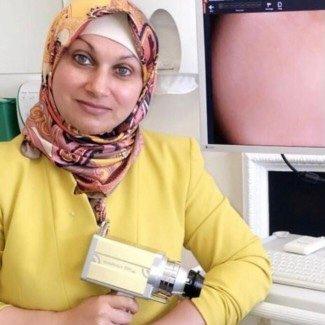
Dr Iaisha Ali, MB ChB MRCP MSc(Oxon)
A London-based dermatologist, specialises in acne, hair loss, hormonal skin disorders, and skin cancer treatment.
Dr Ali has been practising dermatology since 2002, with over 25 years of medical experience delivering consultant-led dermatological care. She previously served as Consultant Dermatologist and Clinical Head of Dermatology at Imperial College Healthcare NHS Trust, where she led complex dermatology services and specialist referral clinics.
