
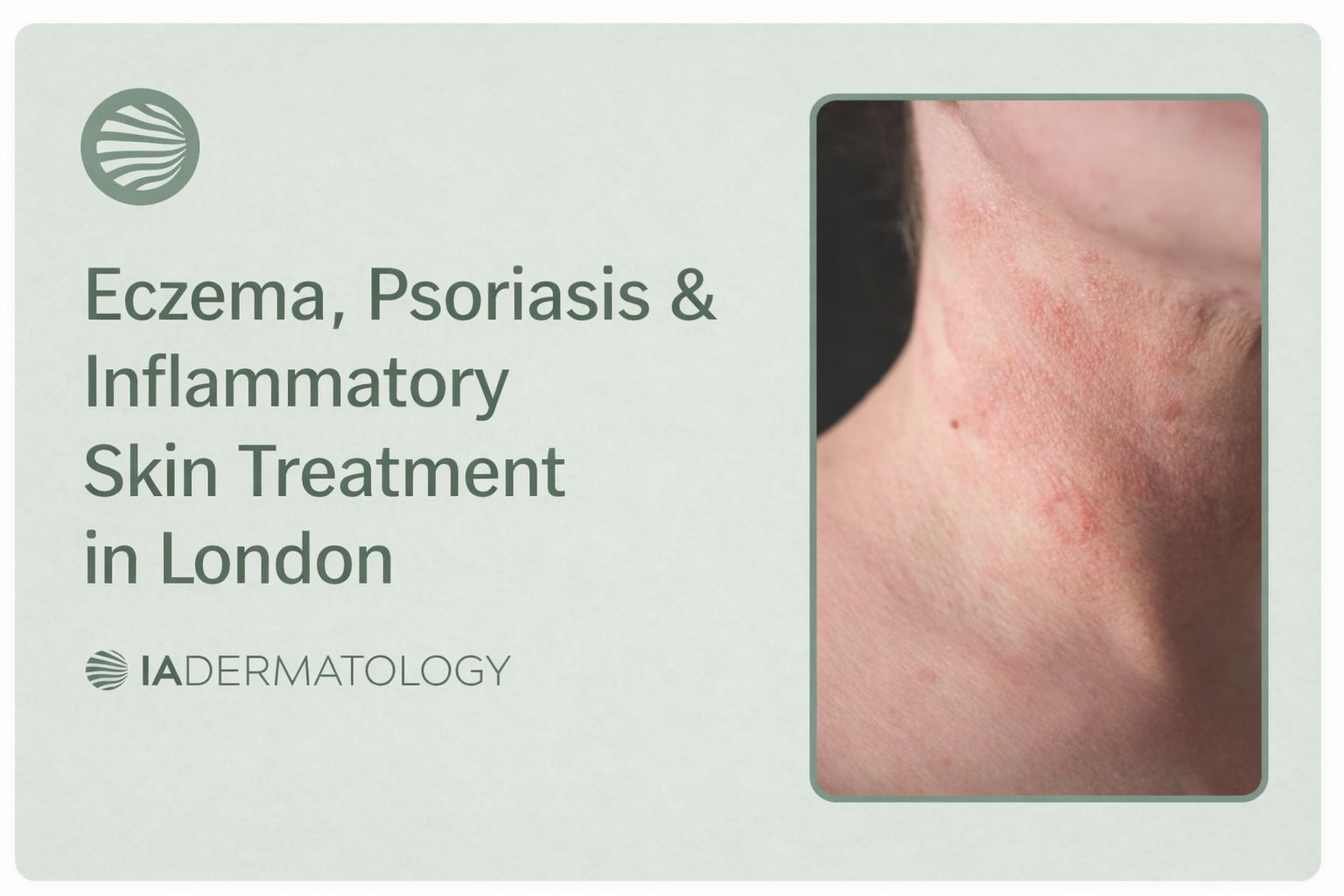
Consultant-Led Diagnosis and Long-Term Disease Control
Chronic inflammatory skin conditions such as eczema and psoriasis require more than temporary symptom relief. They demand accurate diagnosis, expert clinical judgement, and a long-term management strategy tailored to the individual.
At IA Dermatology, located in the heart of London’s medical district, our senior Consultant Dermatologists provide specialist assessments and evidence-based eczema and psoriasis treatments. We focus on disease control, skin barrier repair, and sustainable long-term improvement for all inflammatory skin diseases.
We understand how physically uncomfortable and emotionally distressing these conditions can be. Flare-ups can disrupt daily life, sleep, confidence, and overall well-being. Our role is to provide clarity, stability, and a structured treatment plan that patients can trust.
Psoriasis vs Eczema: How Do I Know Which One I Have?
One of the most common questions our patients ask is, “How do I know if I have psoriasis or eczema?” While both cause red, inflamed skin, they are distinct conditions with different causes and treatment paths.
- How to identify eczema: Eczema (atopic dermatitis) often appears in the “crooks” of the elbows and knees. It is characterized by intense itching and a “leaky” skin barrier. If you are wondering “is it dry skin or eczema?”, eczema is usually much redder, more inflamed, and persistent than simple seasonal dryness.
- Psoriasis symptoms: Psoriasis typically presents as well-defined, thick, silvery scales (plaques). Common areas include the outer elbows, knees, and the scalp. If you notice psoriasis on the stomach or lower back, it is often more “raised” than eczema.
- The Itch Factor: People often ask, “does psoriasis itch?” While eczema is almost always itchy, psoriasis can sometimes feel like a burning sensation or soreness. However, in many cases, psoriasis without itching is possible, whereas eczema is rarely asymptomatic.
Psoriasis vs Eczema on Specific Body Areas
Inflammatory conditions can manifest differently depending on the location:
- Eczema & Psoriasis on the Face: This is a sensitive area requiring specialized care. Eczema psoriasis on the eyes or eyelids requires gentle, non-steroidal options to prevent thinning of the skin.
- Eczema & Psoriasis on the Foot: Often mistaken for fungal infections, eczema psoriasis on the foot can cause painful cracking and difficulty walking.
- Legs and Arms: Pictures of eczema and psoriasis on legs often show eczema in the folds of the knees, while psoriasis appears on the kneecaps.
What Causes Psoriasis? Is it an Autoimmune Disease?
Many patients ask, “is psoriasis an autoimmune disease?” The answer is yes. While eczema is often linked to allergies and a weak skin barrier, psoriasis is driven by an overactive immune system that speeds up skin cell production.
Understanding the link between the immune system and psoriasis is vital for treatment. Because it is a systemic condition, how is psoriasis caused? It is a combination of genetics and environmental triggers. While you may wonder “is psoriasis genetic?”, having the gene doesn’t always mean you will develop the condition—stress, illness, or skin injury often act as triggers.
Common Concerns:
- Is psoriasis contagious? Absolutely not. It is an internal immune response.
- Will psoriasis go away on its own? While it can go into remission, it is a chronic condition. Without professional management, psoriasis really bad flare-ups can occur.
Specialist Care for Complex Inflammatory Skin Conditions
We manage a wide range of inflammatory and immune-mediated skin disorders, including:
- Atopic eczema (dermatitis)
- Psoriasis (plaque, scalp and inflammatory variants)
- Contact dermatitis
- Chronic rashes and unexplained inflammation
- Treatment-resistant or recurrent flare-ups
Each patient receives a thorough medical assessment, with treatment plans designed to control inflammation, prevent recurrence, and protect long-term skin health.
A Medical, Evidence-Based Approach
Our medical, evidence-based approach prioritizes long-term health over “quick fixes.” Depending on your diagnosis, your consultant may recommend:
- Prescription Topical Therapies: Medical-grade creams to reduce inflammation.
- Skin Barrier Repair Programs: Essential for those wondering how to get rid of psoriasis or eczema scaling.
- Oral and Systemic Treatments: For moderate to severe cases where the immune system needs modulation.
- Trigger Identification: We help you understand how to prevent psoriasis flare-ups by identifying lifestyle factors.
We prioritise safe, medically appropriate treatment — not cosmetic masking of symptoms.
Our Philosophy: Control, Stability & Quality of Life
At IA Dermatology, we focus on helping patients achieve:
✔ Reduced flare-ups
✔ Improved skin comfort
✔ Long-term disease stability
✔ Better quality of life
✔ Restored confidence
Our goal is not short-term improvement, but durable results that patients can rely on.
Get Started with Recovery Journey
Discover personalised care and expert guidance to restore your confidence and hair health with elegance and precision.
“I’m really really pleased with my treatment with Dr Ali. I first came through a word of mouth recommendation from a family friend and it was the best investment into my skin that I could have ever made! I used to struggle with repeated breakouts/ acne on my back and face and a super congested and inflamed dermal layer and 9 months on my skin has been transformed (although I started seeing results really quickly at 2 months!). Really recommend Dr Aisha as a dermatologist she’s fantastic and professional.”
✅ Verified Patient Review from Doctify
Visited for Skin Treatment
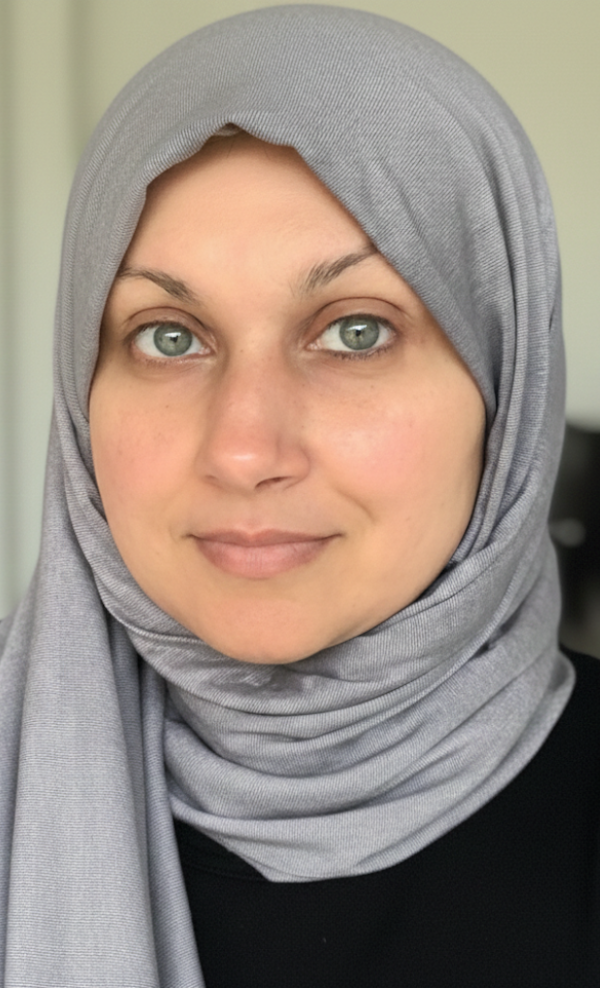
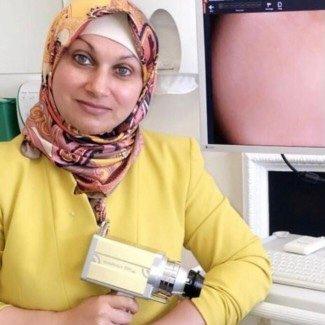
Dr Iaisha Ali, MB ChB MRCP MSc(Oxon)
A London-based dermatologist, specialises in acne, hair loss, hormonal skin disorders, and skin cancer treatment.
Dr Ali has been practising dermatology since 2002, with over 25 years of medical experience delivering consultant-led dermatological care. She previously served as Consultant Dermatologist and Clinical Head of Dermatology at Imperial College Healthcare NHS Trust, where she led complex dermatology services and specialist referral clinics.
