
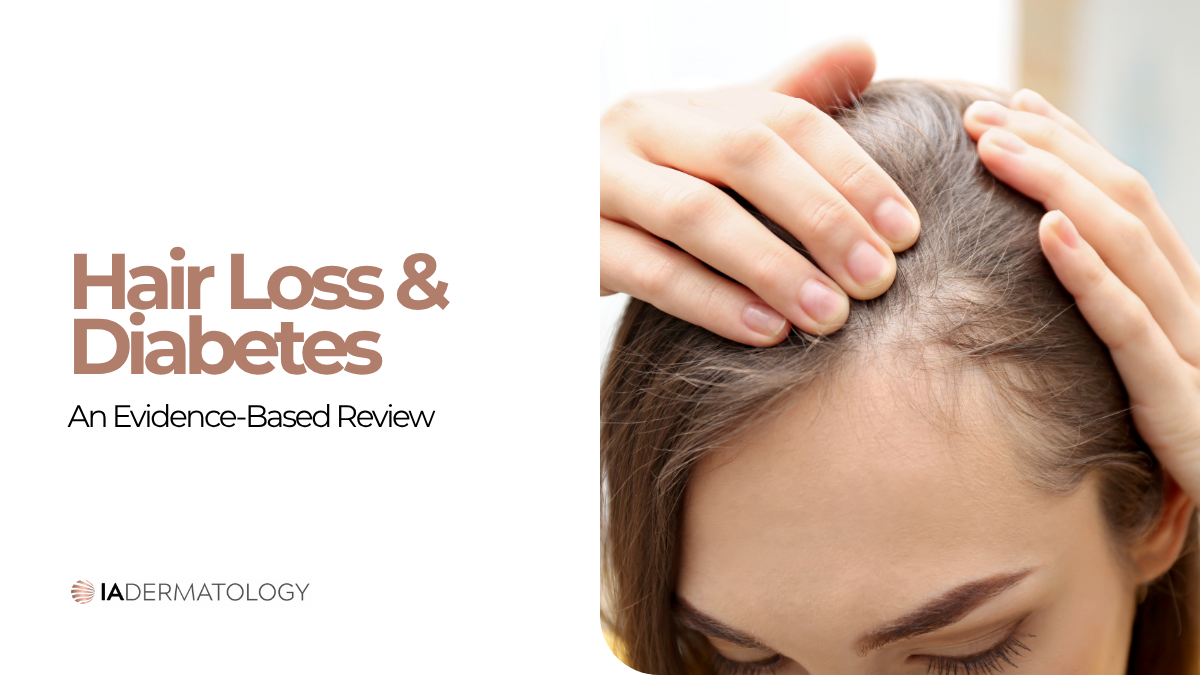
Does diabetes cause hair loss? Hair loss affects millions of people worldwide and carries significant psychological and social consequences. For individuals living with diabetes, hair thinning and shedding represent one of several less-discussed but clinically important complications of the disease. The relationship between diabetes and hair loss is multifactorial — encompassing vascular damage, hormonal dysregulation, autoimmune activity, chronic physiological stress, and the effects of antidiabetic medications. This article reviews the published evidence underpinning each of these mechanisms and discusses the implications for diagnosis and management.
1. Androgenetic Alopecia and Insulin Resistance
The most common form of progressive hair loss is androgenetic alopecia (AGA), characterised by the gradual miniaturisation of hair follicles driven by androgen sensitivity. A growing body of literature links AGA with insulin resistance — a hallmark of type 2 diabetes — suggesting the two conditions may share overlapping pathophysiology.
A landmark population-based case-control study published in The Lancet found a substantially increased risk of hyperinsulinaemia and insulin-resistance-associated disorders — including obesity, hypertension, and dyslipidaemia — in men with early-onset AGA (before age 35), compared with age-matched controls (Matilainen et al., 2000, The Lancet). The authors proposed that early-onset androgenetic alopecia may serve as a clinical marker of insulin resistance, predating the formal diagnosis of type 2 diabetes by years.
The proposed mechanism is biologically plausible. Excess circulating insulin, resulting from peripheral resistance, is hypothesised to stimulate the ovaries and adrenal glands to overproduce androgens, particularly testosterone. This excess testosterone is peripherally converted to dihydrotestosterone (DHT), the more potent androgen responsible for follicular miniaturisation. A study published in ScienceDirect further proposed that elevated insulin also induces microvascular vasoconstriction in the scalp, reducing oxygen and nutrient delivery to follicles and compounding the androgenic effect (Amoretti et al., Journal of the European Academy of Dermatology and Venereology).
A case-control study published in the Indian Journal of Dermatology (Swaroop et al., 2019) examined 50 male patients with early-onset AGA and 50 age-matched controls, finding that metabolic syndrome — of which insulin resistance is a central feature — was present in 82% of those with AGA. While the study found that insulin resistance in isolation did not reach statistical significance (p=0.23) in differentiating the groups, it underscored the broader metabolic context in which AGA often develops.
Research published in the Journal of Clinical and Aesthetic Dermatology further confirmed this relationship, reporting that microvasculature changes associated with insulin resistance represent a distinct mechanistic pathway in AGA pathogenesis — separate from, but synergistic with, the androgen-driven route.
2. Telogen Effluvium: The Stress-Mediated Pathway
Telogen effluvium (TE) is a form of diffuse, non-scarring hair shedding that occurs when a large proportion of follicles prematurely shift from the active growth phase (anagen) into the resting phase (telogen), after which they shed. It is the most commonly reported pattern of hair loss in people with diabetes, and is often reversible once the underlying trigger is addressed.
Poorly controlled diabetes represents a chronic physiological stressor. Sustained hyperglycaemia elevates cortisol levels, and research in Nature (Choi et al., 2021) demonstrated that corticosterone — the rodent equivalent of cortisol — directly inhibits Gas6 signalling in hair follicle stem cells, locking them in a prolonged quiescent state and preventing the onset of hair regeneration. This finding provides a molecular basis for stress-mediated hair loss in diabetic individuals.
The physiological burden of chronic illness, compounded by the psychological impact of managing a complex, lifelong condition, creates the conditions under which TE can become recurrent or persistent rather than a single self-limiting episode. This type of hair loss typically manifests as diffuse thinning across the scalp rather than discrete bald patches, making it harder to attribute clearly to a single cause in clinical settings.
3. Alopecia Areata and Type 1 Diabetes: An Autoimmune Connection
Alopecia areata (AA) is an autoimmune condition in which T-lymphocytes erroneously target hair follicles, resulting in patchy, well-demarcated areas of hair loss on the scalp or body. The condition disproportionately affects individuals with other autoimmune diseases — a pattern well-documented in the literature.
A clinical study published in Skin Appendage Disorders (Thomas and Kadyan, 2008) examining 71 patients with alopecia areata found significant associations with thyroid disorders (observed-to-expected ratio 3.2, p=0.01), atopic dermatitis, and other autoimmune diseases. The co-occurrence of multiple autoimmune conditions in single individuals is consistent with a shared immunological predisposition.
Type 1 diabetes (T1D), itself an autoimmune disease driven by immune-mediated destruction of pancreatic beta cells, shares this vulnerability. A study published in December 2024 found that both prediabetes and diabetes are associated with an increased risk of developing alopecia areata, with chronic systemic inflammation proposed as the mechanistic link connecting metabolic dysregulation to autoimmune follicular attack.
Case reports from the European Congress of Endocrinology further highlighted the interplay between alopecia areata, autoimmune thyroid disease, and the risk of autoimmune diabetes — noting that anti-GAD antibodies (markers of beta cell autoimmunity) were detectable in some patients presenting with alopecia areata in the context of autoimmune polyglandular syndrome, before diabetes had clinically manifested.
4. Microvascular Damage and Poor Scalp Circulation
Chronic hyperglycaemia causes progressive damage to small blood vessels throughout the body — a well-established complication of both type 1 and type 2 diabetes. Hair follicles are metabolically highly active structures with significant demands for oxygen and nutrient delivery. When the microvasculature supplying the scalp is compromised, follicular function deteriorates.
Research suggests this microvascular impairment may operate independently of androgen-mediated mechanisms. Insulin resistance is associated with early vascular dysfunction, even in the absence of overt diabetes, meaning the effects on hair follicle circulation may begin years before a formal diagnosis. Is hair loss a symptom of diabetes on the body as well? Clinical evidence suggests so. Hair loss on legs and diabetes are often linked because of peripheral vascular issues. Diabetes leg hair loss occurs when blood flow to the lower extremities is insufficient to support the hair growth cycle. This hair loss from diabetes on the legs is a key clinical indicator that a patient’s microcirculation may be compromised.
5. Medication-Related Hair Loss
Metformin is the first-line oral medication for type 2 diabetes and is among the most widely prescribed drugs globally. Long-term metformin use is associated with impaired absorption of vitamin B12 in the terminal ileum, a side effect recognised by regulatory bodies including the UK’s Medicines and Healthcare products Regulatory Agency (MHRA), which recommends monitoring B12 levels in patients on prolonged metformin therapy.
A 2013 study documented that chronic metformin use significantly reduced serum levels of both vitamin B12 and folate. Both nutrients are essential for normal cell division and keratinocyte proliferation within hair follicles — their deficiency creates conditions unfavourable to healthy hair growth and can potentiate diffuse shedding. A more recent study, Low-Dose Metformin and Profibrotic Signature in Central Centrifugal Cicatricial Alopecia (Bao et al., 2024), identified an association between metformin and profibrotic signalling in a specific form of scarring alopecia — central centrifugal cicatricial alopecia — adding a new dimension to the medication’s dermatological profile.
Interestingly, research has also explored the potential therapeutic role of metformin in hair loss. A 2025 study in Research (Mai et al.) developed a metformin-based nanosystem that promoted hair growth in androgenetic alopecia models, and a 2023 paper in Medical Hypotheses (Kokhabi et al.) proposed that topical metformin might have therapeutic utility in alopecia areata through its immunomodulatory properties. This apparent paradox — systemic metformin potentially contributing to deficiency-related shedding, while topical metformin may promote regrowth — underscores the importance of route of administration and dosage in pharmacological effects on the hair follicle.
GLP-1 Receptor Agonists: An Emerging Concern
Glucagon-like peptide-1 (GLP-1) receptor agonists — including semaglutide (Ozempic, Wegovy) and tirzepatide (Mounjaro) — have transformed the management of type 2 diabetes and obesity. However, reports of alopecia as an adverse event have emerged with increasing regularity.
A disproportionality analysis published in the Journal of the European Academy of Dermatology and Venereology(Godfrey et al., 2025) analysed data from the FDA Adverse Event Reporting System (FAERS) between 2022 and 2023, identifying elevated reporting odds ratios for alopecia associated with semaglutide (ROR 2.46; 95% CI 2.14–2.83) and tirzepatide (ROR 1.73; 95% CI 1.42–2.09). These signal-detection figures do not establish causality, but they are statistically meaningful and warrant clinical attention.
A real-world pharmacovigilance study (Nakhla et al., 2024, Cardiovascular Drugs and Therapy) similarly found a significant association between GLP-1 receptor agonists and hair loss in a broad population of diabetic patients. The proposed mechanisms are twofold: first, the rapid and significant weight loss induced by these agents can precipitate telogen effluvium, as the metabolic shock of major caloric restriction pushes follicles into the resting phase; second, GLP-1 receptors have been identified in hair follicle tissue, raising the possibility of a direct pharmacological effect on the hair growth cycle.
A systematic review published in Cureus (Alsuwailem et al., 2025) analysed data from 2,905 adult patients across multiple study designs and found hair loss was a consistent feature across GLP-1 RA user populations, particularly among female patients who were overweight or obese and had experienced hair loss prior to treatment initiation. A 2023 paper by Natarelli et al. (Integrative and Mechanistic Approach to the Hair Growth Cycle and Hair Loss) estimated that Mounjaro was associated with hair loss in approximately 5% of patients, with higher incidence among women experiencing significant weight loss.
A striking counterpoint emerges from a 2024 JAAD case report (Gordon, Musleh, and Bordone), which documented notable improvement in hair loss following tirzepatide treatment in a patient with insulin resistance — suggesting that for some individuals, improved metabolic control may favour hair restoration. This highlights the heterogeneity of individual responses and the need for further investigation into which patient characteristics predispose to hair loss versus improvement with GLP-1 therapy.
A 2024 commentary in the dermatological literature (Desai et al., GLP-1 Agonists and Hair Loss: A Call for Further Investigation) called for formal prospective studies to characterise the incidence, timing, reversibility, and histological features of GLP-1-associated alopecia, noting that the current evidence base is largely retrospective and relies on passive pharmacovigilance data.
DPP-4 Inhibitors: A Therapeutic Angle
In contrast to concerns about GLP-1 agonists, research has explored whether DPP-4 inhibitors — another class of antidiabetic drugs — might actually benefit hair follicle function. A 2023 study in the Journal of Investigative Dermatology (Helm et al.) found that DPP-4 inhibition improved hair follicle activation and regeneration in experimental models, suggesting a potential repurposing of this drug class for hair loss conditions. DPP-4 is an enzyme expressed in dermal papilla cells, and its inhibition appears to support anagen re-entry in hair follicles.
6. The Role of Diabetes-Related Thyroid Disease
Complicating the direct diabetes–hair loss relationship is the high prevalence of thyroid dysfunction in people with diabetes — particularly type 1. Thyroid disorders, especially hypothyroidism, are well-established causes of diffuse hair loss. They can operate independently of glycaemic control, or synergistically with it, making clinical attribution difficult. Clinicians managing diabetic patients with hair loss are advised to screen for thyroid dysfunction as a potential contributing or primary cause.
7. Hair as a Biomarker of Metabolic Risk
An intriguing emerging area of research suggests that changes to hair — including early-onset AGA and even premature greying — may serve as early clinical markers of metabolic dysfunction, potentially preceding the formal diagnosis of type 2 diabetes by years.
A 2017 study in Medical Hypotheses (Miranda et al.) proposed that hair follicle characteristics could serve as early markers of type 2 diabetes. A 2025 lipidomic study published in the International Journal of Molecular Sciences (Wu et al.) identified distinct differences in the lipid composition of hair follicles between women with type 2 diabetes and healthy controls, finding altered lipid profiles that may contribute to accelerated greying in the diabetic population.
Clinical Implications and Management
The evidence supports several practical clinical considerations:
Glycaemic optimisation is the cornerstone of management. Improved blood glucose control reduces the physiological stressors — including microvascular damage and hormonal dysregulation — that underlie most forms of diabetes-associated hair loss. Case reports, including one published in Drugs – Real World Outcomes (Ravi et al., 2021), have documented reversal of alopecia following insulin therapy in patients with previously uncontrolled type 2 diabetes.
Nutritional screening is advisable for patients on long-term metformin, with particular attention to vitamin B12 and folate status. Supplementation where deficiency is confirmed may help reduce medication-related shedding.
Medication review is warranted in patients initiating GLP-1 receptor agonists, particularly those with pre-existing hair loss. Clinicians should counsel patients about the possibility of transient telogen effluvium associated with significant weight loss, and distinguish this from a potential direct drug effect.
Dermatology referral For persistent thinning, we may recommend Advanced PRP Therapy or RF microneedling to stimulate regrowth.
Conclusion
The relationship between diabetes and hair loss is complex, multipath, and still incompletely understood. Published evidence confirms links between insulin resistance and androgenetic alopecia, between chronic stress and telogen effluvium, between type 1 diabetes and alopecia areata, and between antidiabetic medications — particularly metformin and GLP-1 receptor agonists — and hair shedding. At the same time, emerging data suggests that improved metabolic control and novel pharmacological approaches may offer therapeutic promise for hair restoration in some diabetic patients.
If you are experiencing hair thinning and diabetes symptoms, please contact our London clinic for a comprehensive consultation.
References
- Matilainen, V., et al. (2000). Early androgenetic alopecia as a marker of insulin resistance. The Lancet, 356(9246).
- Swaroop, M., et al. (2019). The Association of Metabolic Syndrome and Insulin Resistance in Early-Onset Androgenetic Alopecia in Males: A Case-Control Study. Indian Journal of Dermatology.
- Choi, S., et al. (2021). Corticosterone inhibits GAS6 to govern hair follicle stem-cell quiescence. Nature.
- Thomas, E.A., & Kadyan, R.S. (2008). Alopecia areata and autoimmunity: a clinical study. Indian Journal of Dermatology, 53(2), 70–74. PMC2763714.
- Bao, L., et al. (2024). Low-Dose Metformin and Profibrotic Signature in Central Centrifugal Cicatricial Alopecia. Dermatology journal.
- Godfrey, H., et al. (2025). Alopecia Associated With the Use of Semaglutide and Tirzepatide: A Disproportionality Analysis Using the FDA Adverse Event Reporting System (FAERS) From 2022 to 2023. Journal of the European Academy of Dermatology and Venereology, 39(2), e153–e154.
- Nakhla, M., et al. (2024). Risk of Suicide, Hair Loss, and Aspiration With GLP1-Receptor Agonists and Other Diabetic Agents: A Real-World Pharmacovigilance Study. Cardiovascular Drugs and Therapy.
- Gordon, E.R., Musleh, S., & Bordone, L.A. (2024). Treatment of Insulin Resistance With Tirzepatide Leading to Improvement of Hair Loss. JAAD Case Reports, 50, 123–125.
- Alsuwailem, O.A., et al. (2025). Hair Loss Associated With Glucagon-Like Peptide-1 (GLP-1) Receptor Agonist Use: A Systematic Review. Cureus. DOI: 10.7759/cureus.92454.
- Helm, M., et al. (2023). Repurposing DPP4 Inhibition to Improve Hair Follicle Activation and Regeneration. Journal of Investigative Dermatology, 143(11), 2132–2144.
- Kokhabi, P., et al. (2023). Topical Metformin as a Novel Therapy for Alopecia Areata Due to Its Immunologic Effects. Medical Hypotheses, 179, 111155.
- Mai, Q., et al. (2025). Robust Metformin Nanosystem Promotes Hair Growth in Androgenetic Alopecia. Research, 8, Article 0780.
- Miranda, J.J., et al. (2017). Hair Follicle Characteristics as Early Marker of Type 2 Diabetes. Medical Hypotheses.
- Wu, L., et al. (2025). Lipidomics Combined with Network Pharmacology to Explore Differences in the Mechanisms of Grey Hair Development Between Type 2 Diabetes Mellitus and Normal Populations (Female). International Journal of Molecular Sciences, 26(5), 2034.
- Natarelli, N., et al. (2023). Integrative and Mechanistic Approach to the Hair Growth Cycle and Hair Loss. Dermatology.
- Desai, et al. (2024). GLP-1 Agonists and Hair Loss: A Call for Further Investigation. Dermatological commentary.
- Ravi, K., et al. (2021). Reversal of Alopecia by Insulin Therapy in Uncontrolled Type 2 DM: A Case Report. Drugs – Real World Outcomes.
This article is intended for educational purposes and reflects the published scientific literature. It does not constitute medical advice. Patients experiencing hair loss should consult a qualified healthcare professional.
Dr Iaisha Ali, MB ChB MRCP MSc(Oxon)
A London-based dermatologist, specialises in acne, hair loss, hormonal skin disorders, and skin cancer treatment.
Dr Ali has been practising dermatology since 2002, with over 25 years of medical experience delivering consultant-led dermatological care. She previously served as Consultant Dermatologist and Clinical Head of Dermatology at Imperial College Healthcare NHS Trust, where she led complex dermatology services and specialist referral clinics.
