
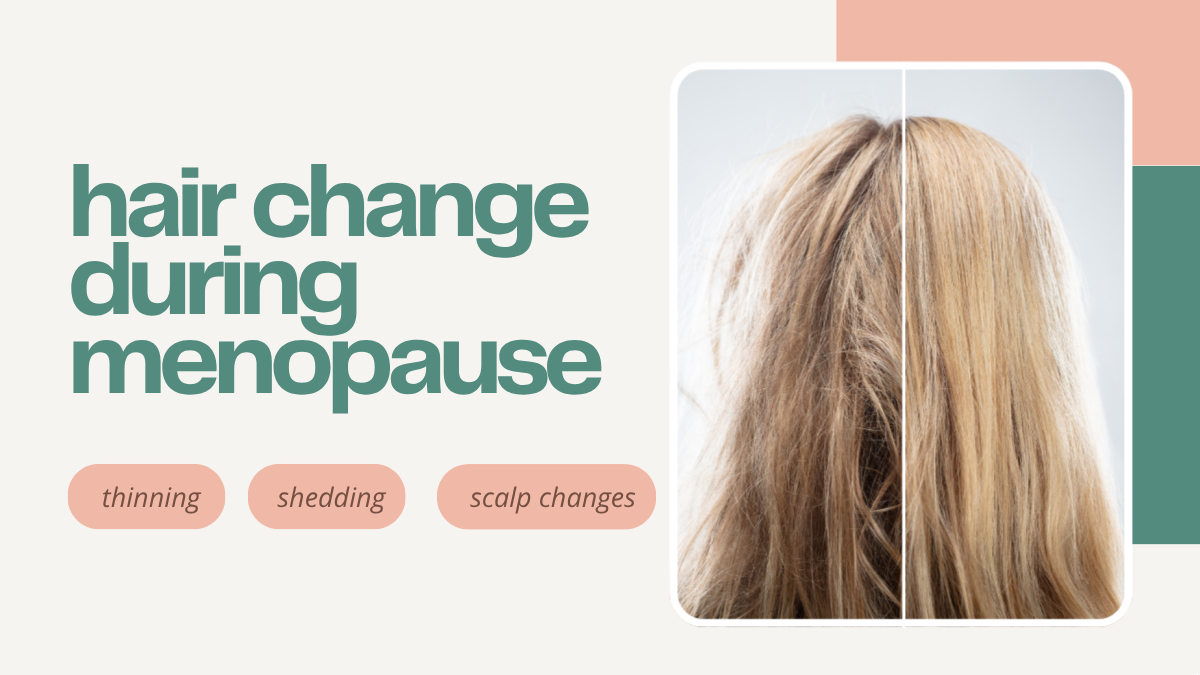
For many women, changes in hair are among the most distressing — and most unexpected — symptoms of menopause. Hair that once felt thick and easy to manage may gradually become finer, drier, flatter or more fragile. Some women notice obvious shedding. Others simply see their parting widen, or find their ponytail thinner than it used to be.
As a consultant dermatologist specialising in hair treatments, I’ve spent a significant part of my career trying to understand exactly why this happens. During my research at Oxford University, our team investigated hair changes in postmenopausal women across a large population — one of the first studies of its kind — and the findings, later published in the British Journal of Dermatology, helped reframe how we think about this problem.
What they confirmed is something I see in clinic every week: menopausal hair change is extremely common, frequently distressing, and almost always more complex than simply “getting older.”
The Hormone–Hair Connection: Why Does Menopause Cause Hair Loss?
Hair follicles are remarkably hormone-sensitive structures. During menopause, levels of oestrogen and progesterone decline — and both hormones normally play a role in supporting the hair growth cycle, helping to keep follicles in the active growing phase for longer. As those levels fall, hair may spend less time growing and more time resting or shedding. Over time, this leads to reduced density and finer hair overall.
At the same time, the relative influence of androgens — hormones present in all women — can become more noticeable in those who are genetically susceptible. This can drive follicular miniaturisation, a gradual process in which individual hairs become progressively finer, shorter and sparser often diagnosed as female patterned hair loss.
What Our Oxford Research Showed About Menopause Balding
In our Oxford study of 758 postmenopausal women, over 40% reported some degree of hair loss after menopause. The most common pattern — described by around a quarter of participants — was diffuse, all-over thinning. A smaller group developed more noticeable thinning at the front or crown.
Perhaps the most clinically useful finding was that not all menopausal hair change looks the same, or comes from the same cause. We identified two distinct patterns.
The first was a more generalised thinning, associated with increasing age and a reduction in both scalp and body hair. This likely reflects broader, age-related changes in follicular activity rather than hormonal change alone.
The second pattern was rather different: frontal thinning combined with increased facial hair growth. This tended to occur in relatively younger postmenopausal women and is more suggestive of androgen sensitivity playing a prominent role.
This distinction matters enormously in practice, because the two patterns don’t necessarily respond to the same treatments.
Does Your Hair Change During Menopause or Is It Simply Ageing?
This is one of the questions I’m asked most often, and the honest answer is: usually both.
Research by Professor Andrew Messenger and colleagues has shown that female hair thinning increases with age even in women without elevated androgens — which tells us that hormones are not the whole story. The hair growth cycle gradually shortens over time. Follicular activity declines. Hair fibre diameter reduces. Years of environmental exposure take their toll. Genetics plays a background role throughout.
Our Oxford data supported this view: some women appeared to develop thinning driven primarily by these age-related changes, while others showed patterns more clearly linked to hormonal or androgen-related mechanisms. In reality, for most women, all of these factors are operating at once.
Hair Texture Changes During Menopause
Menopause doesn’t only affect scalp hair. In our study, nearly half of women reported increased facial hair — particularly around the chin — while simultaneously noticing less hair on their legs and underarms. This apparent paradox, more hair in some places and less in others, reflects the way different follicles respond differently to the same hormonal shifts.
Many women also notice changes in texture that have nothing to do with density. Hair may become drier, more brittle, less shiny and harder to style. These changes reflect a combination of reduced scalp oil production, alterations in the hair fibre itself, and the cumulative effects of follicular ageing.
When Hair Loss Isn’t Just Menopause
Something I always stress with patients: menopause may be contributing to hair change, but it doesn’t mean it’s the only thing going on. Iron deficiency, thyroid disorders, vitamin D deficiency, chronic stress, inflammatory scalp conditions, autoimmune hair disease and certain medications can all cause or worsen hair thinning — and these are entirely treatable if identified.
This is why a proper assessment matters rather than assuming everything is hormonal. In clinic, that usually means a detailed history, scalp examination, trichoscopy and targeted blood tests where appropriate. Getting the diagnosis right is the foundation for getting the treatment right.
Can Menopause Hair Loss Be Treated?
In many cases, yes — and that’s often reassuring for women who assumed nothing could be done.
Treatment depends entirely on what’s driving the change. Topical minoxidil has a solid evidence base for female hair loss.
Nutritional deficiencies, when identified, are corrected. Scalp inflammation is treated. Some women are good candidates for oral therapies. Procedural options like low-level laser therapy or platelet-rich plasma exist, though the evidence varies and these work best as part of a broader plan rather than standalone solutions.
Hormone replacement therapy isn’t prescribed specifically as a hair treatment, but for some women, stabilising hormonal symptoms more broadly may have a positive indirect effect on hair.
The Emotional Weight
Hair is deeply tied to how women feel about themselves — their confidence, their identity, their sense of being well. When hair changes are dismissed as trivial or inevitable, it can feel isolating.
Our research was motivated partly by the sense that this was an area that deserved to be taken seriously. The changes are common, they’re real, and — with the right approach — many of them can be meaningfully improved.
The first step is understanding what’s actually happening. From there, a targeted, evidence-based plan can make a real difference, not just to the hair itself, but to how a woman feels in her own skin.
