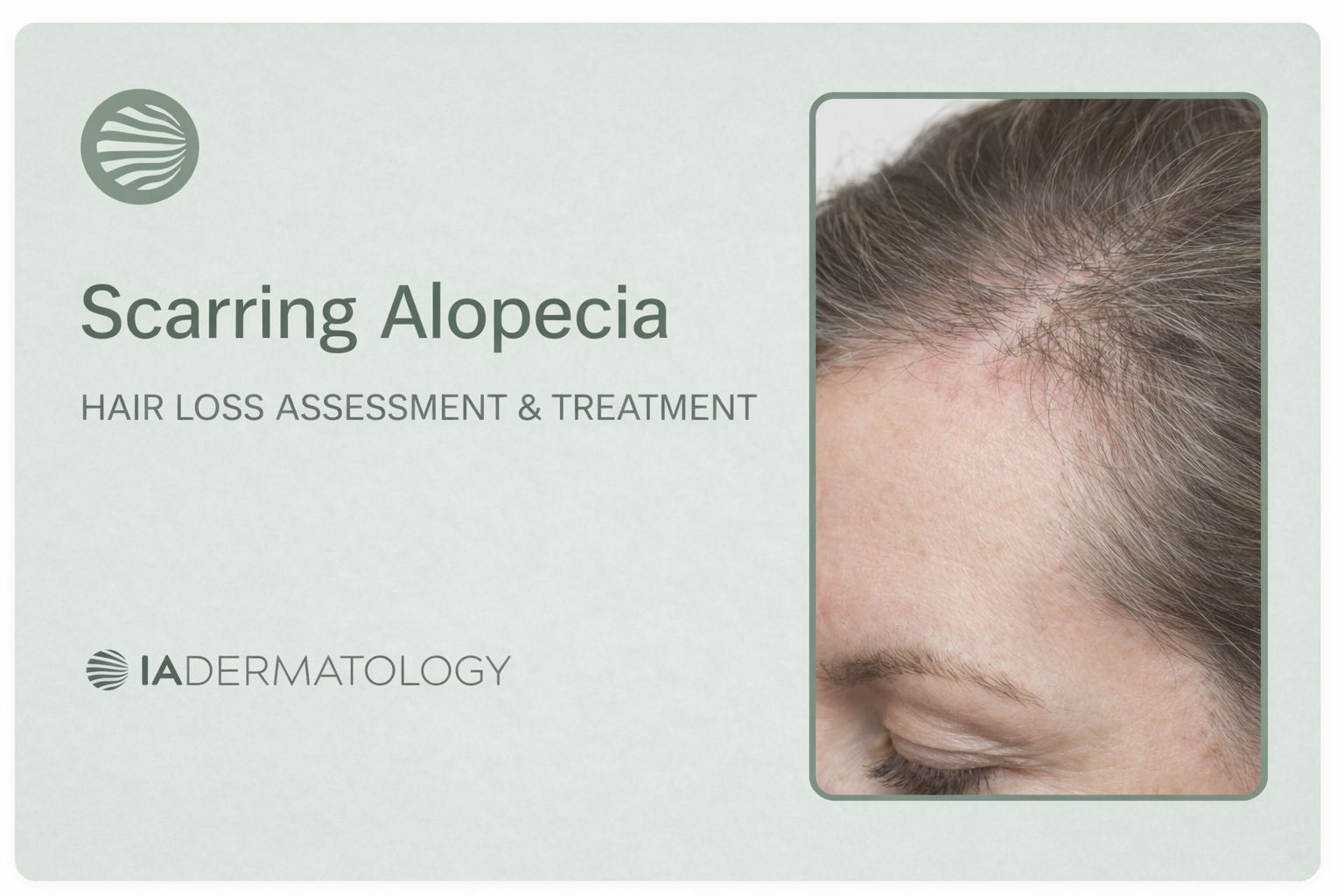
This type of hair loss occurs when inflammation or injury destroys hair follicles and replaces them with scar tissue – this can lead to permanent hair loss if not treated. Early diagnosis and prompt treatment are essential to prevent further hair loss.
What Is Scarring Hair Loss?
Scarring alopecia is a group of hair loss disorders that permanently damage the hair follicles. The skin where hair once grew often appears smooth, shiny, and lacks visible follicle openings. It can affect any hair-bearing area , but most commonly involves the scalp.
Types:
- Primary scarring alopecia: Autoimmune or inflammatory conditions directly attack the hair follicles (e.g., lichen planopilaris, discoid lupus erythematosus).
- Secondary scarring alopecia: Hair follicles are destroyed as a result of burns, infections, tumors, radiation, or other external injury.
Common Signs & Symptoms
- Permanent bald patches with a smooth, shiny scalp surface.
- Itching, burning, tenderness, or pain in affected areas (sometimes before hair loss).
- Redness, flaking, or crusting of the scalp.
- Pustules (small pus-filled bumps) or scaling in certain conditions.
- Hair loss can be patchy, localised, or more widespread, depending on the cause.
What Causes It?
Scarring hair loss is caused by the destruction of the hair follicle stem cells at the bulge area of the follicle:
- Autoimmune/inflammatory conditions: The immune system attacks hair follicles
- Bacterial infections: Chronic folliculitis can damage follicles.
- Trauma or injury: Burns, radiation therapy, and surgical scars can cause secondary scarring alopecia.
- Genetic factors: Some forms (e.g., CCCA) are more common in certain ethnic groups and may run in families.
Scarring alopecia can affect both men and women, though it is generally more common in women.
Get Started with Recovery
Discover personalized care and expert guidance to restore your confidence and hair health with elegance and precision.
“I have been seeing Dr Ali for a few years now and I am very happy with my results. I had already tried a few doctors before her but was the only dr that was able to produce results. This is the main reason why I stayed with her. She is also a great person and will take time to speak with and navigate/ explain the condition. I would definitely recommend her.”
✅ Verified Patient Review from Doctify
Visited for Hair Loss Treatment
Treatment Options
Medical Treatments
- Anti-inflammatory medicines:
- Anti-inflammatory medicines:
- Corticosteroid injections into affected patches
- Topical steroid creams or scalp solutions.
- Topical Calcineurin inhibitors
- Anti-inflammatory antibiotics
- Oral steroids for rapid control of inflammation in severe cases.
- Hydroxychloroquine
- Oral retinoids
- Systemic immunosuppressive medications: Methotrexate, mycophenolate, or ciclosporin in resistant cases.
What to Expect with Treatment
Our goal is to stop active inflammation to preserve remaining hair.
Regrowth is difficult once follicles are destroyed. Early intervention offers the best chance to stabilise the disease.
Some patients need long-term low-dose medication to maintain control.
Our Diagnostic Approach
We guide you with realistic timelines, ongoing monitoring, and emotional support.
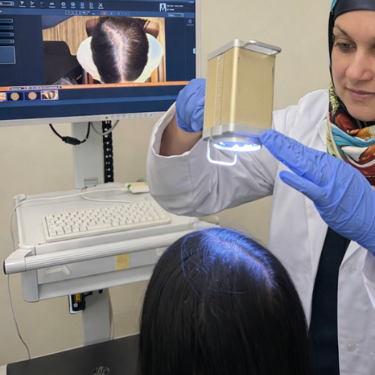
Expert clinical assessment by Dr. Iaisha Ali, hair specialist dermatologist
Trichoscopy & scalp biopsy where required.
Individualised treatment plan with a focus on halting disease activity.

Emotional support and cosmetic solutions offered alongside medical treatment.
FAQs