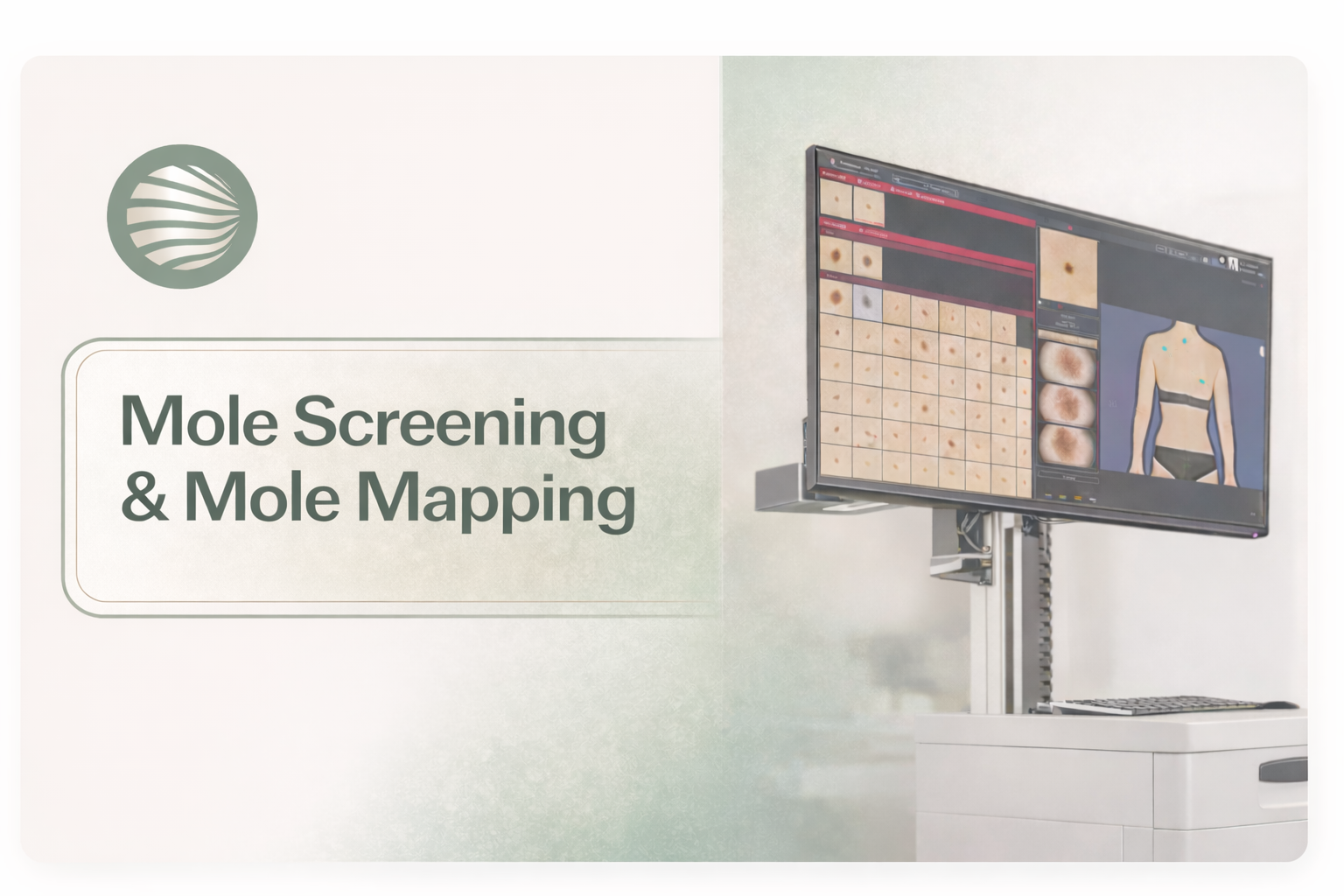
At IA Dermatology, we provide advanced mole screening and full-body mole mapping using state-of-the-art digital imaging technology to monitor your skin with precision and accuracy.
Our consultant dermatologists perform comprehensive skin examinations to identify suspicious lesions, track mole changes over time, and detect early signs of skin cancer before they become clinically obvious.
This proactive, preventative approach offers patients clarity, reassurance, and long-term skin health monitoring.
Medical-grade skin surveillance for early detection and peace of mind.
Mole mapping allows us to digitally record and compare your moles over time, helping distinguish harmless changes from those that require further investigation. This is particularly valuable for patients with multiple moles, atypical moles, fair skin, personal or family history of skin cancer, or high sun exposure.
Every assessment is performed by a senior consultant dermatologist, ensuring clinical judgement guides every decision. Suspicious lesions can be surgically removed on the same day if needed.
Who Benefits Most from Mole Screening?
| Lower-Risk Patients | Higher-Risk Patients (Benefit Most) |
| Few moles (under 50). | More than 50 moles on the body. |
| Moles are round, even in colour, and stable. | Irregular or atypical (unusual-looking) moles. |
| No personal or family history of skin cancer. | Previous abnormal mole or melanoma in the past. |
| Can monitor skin themselves with ease. | Family history of melanoma (parent, sibling, child). |
| Not taking medicines that affect the immune system. | No major sunburn history. |
| Can monitor their skin themselves with ease. | Weakened immune system (e.g., organ transplant patients, long-term immunosuppressive drugs). |
| May choose screening for reassurance. | Fair skin, red hair, freckles, blue/ green eyes with fair skin, history of severe sunburns, especially as a child. |
FotoFinder ATBM Mole Screening
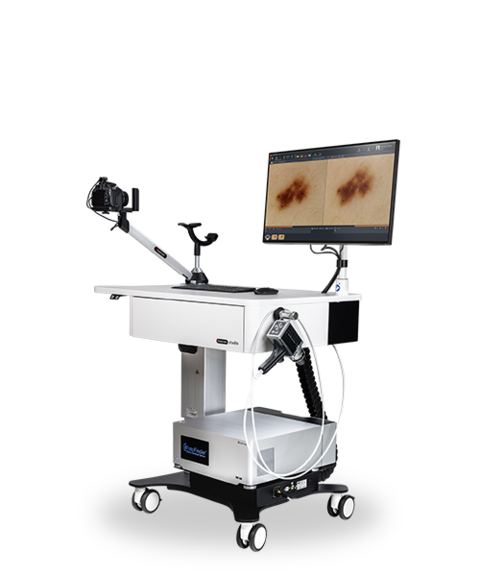
Our clinic uses the FotoFinder ATBM (Automated Total Body Mapping) system, one of the most advanced technologies available for mole screening. Unlike standard photographs, this system combines high-resolution total body imaging with dermatoscopic images of individual moles. Specialised software automatically maps and locates every mole, allowing precise comparison over time. This means we are not relying on memory or single photographs; instead, the system provides a more objective and reliable method of monitoring your skin.
By detecting even the smallest changes early, FotoFinder helps dermatologists identify suspicious moles sooner. It can also show when a mole is stable and harmless, which means patients may avoid unnecessary surgery or removal of moles that do not pose a risk. This makes the system both highly accurate and reassuring, giving you confidence in your skin health.
Treatment of Moles
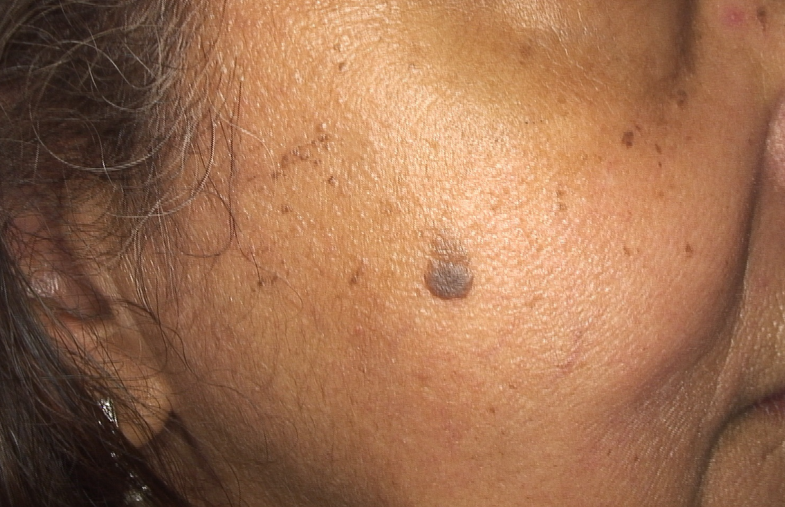
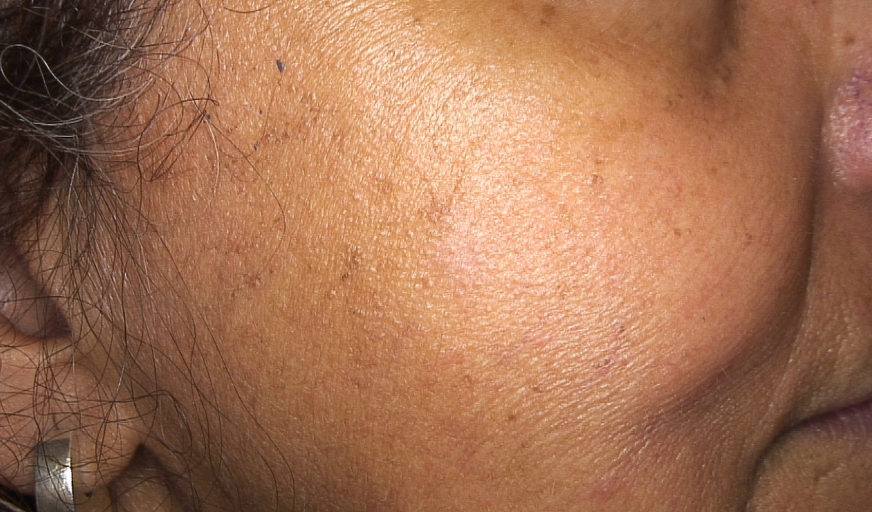
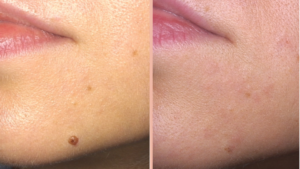
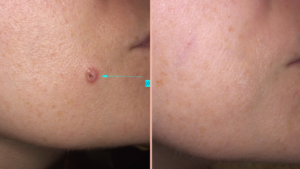
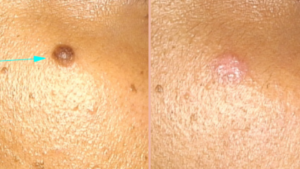
Moles will be surgically removed if they have any suspicious features. This usually involves a simple excision with a very narrow margin (about 1 mm) of normal skin around the mole, designed to minimise scarring. The removed mole is then sent to a specialist laboratory, where it is carefully processed and examined by an experienced pathologist who specialises in skin cancer diagnosis. This ensures the highest quality and accuracy of analysis.
If a mole is confirmed as benign (harmless), no further surgical treatment is required. However, moles may also be removed for cosmetic or practical reasons; for example, if they are catching on clothing, causing discomfort, or if you simply dislike their appearance. In these cases, different techniques may be used, such as flattening a raised mole or reshaping and shrinking a mole to improve cosmetic results. These options would be discussed with you in detail before treatment.
Some mole removal techniques may require a stitch, while others can be performed without stitches. Healing time varies depending on the site: on the face, most mole removals heal within 5–7 days, while on the body, healing typically takes 10–14 days.
Mole Screening & Results
Mole screening is a careful check of your skin, often using a dermatoscope (a special magnifying light) to look closely at moles and other pigmented spots. The aim is to detect skin cancers such as melanoma early, when treatment is most effective.
Benefits of mole screening
✅ Tailored prevention: Provides advice about sun protection and your personal level of risk.
✅ Early detection: Identifies skin cancers at an early stage, often before they become dangerous.
✅ Peace of mind: Reassures you if your moles are harmless.
✅ Accurate monitoring: Photos and digital dermoscopy can track changes over time.
✅ Expert advice: Helps you understand which of your moles are normal and what to watch for in the future.


Spot Changes Early, Stay Confident
Advanced Mole Screening with FotoFinder AI in London
Early detection can save lives. Our painless, AI-powered mole mapping helps identify risks before they become problems.
“Doctor Ali was extremely helpful, understanding and informative and provided excellent care as well as assistance with my future care. It is one of the best doctor-patient experiences I’ve ever had“
✅ Verified Patient Review from Doctify
Visited for Mole Removal

What to Expect During a Mole Screening Consultation
1. Medical History
Your consultation will begin with a detailed discussion of your background and risk factors. You will be asked questions about:
- Your history of sun exposure and sunburns.
- Any medications you take that may affect your skin cancer risk.
- Your sun protection habits (e.g., sunscreen use, clothing, shade).
- Your day-to-day UV exposure at work, home, or during hobbies.
- Your holidays or travel to sunny or high-altitude places.
- Your family history of melanoma or abnormal moles.
2. Skin Examination
You will then have a thorough examination of your skin using a digital dermatoscope.
- This device uses cross-polarised light to provide high-definition analysis of each mole.
- If appropriate, a full-body mole mapping will be undertaken or recommended. This records detailed images of your skin so that moles can be compared over time.
3. Next Steps if a Mole Appears Suspicious
If a mole looks unusual, there are two main options:
- Monitoring and Review
- If changes are uncertain, the mole will be carefully documented and reviewed again after 4–6 weeks.
- If there are no significant changes, the mole can continue to be monitored.
- If there are further changes, the mole will be recommended for removal.
- Surgical Excision
- If a mole looks clearly suspicious, removal will be advised.
- This is done under local anaesthetic ( numbing solution injected into the skin with a very fine needle). The surgical procedure usually takes 30–40 minutes.
- A small injection numbs the skin, the mole is removed with a narrow 1 mm margin, and stitches are used to close the area.
- Stitches are removed after 5–7 days on the face or 10–14 days on the body.
- The mole is sent to a specialist laboratory where a pathologist with expertise in skin cancer examines it.
4. Follow-Up and Results
- You will return to the clinic to have your stitches removed and to discuss your results.
- For most patients, no further treatment is required once the mole is confirmed to be benign.
- In a small number of cases, if cancer is diagnosed, further treatment or surgery may be required. This will always be explained in detail and managed appropriately.