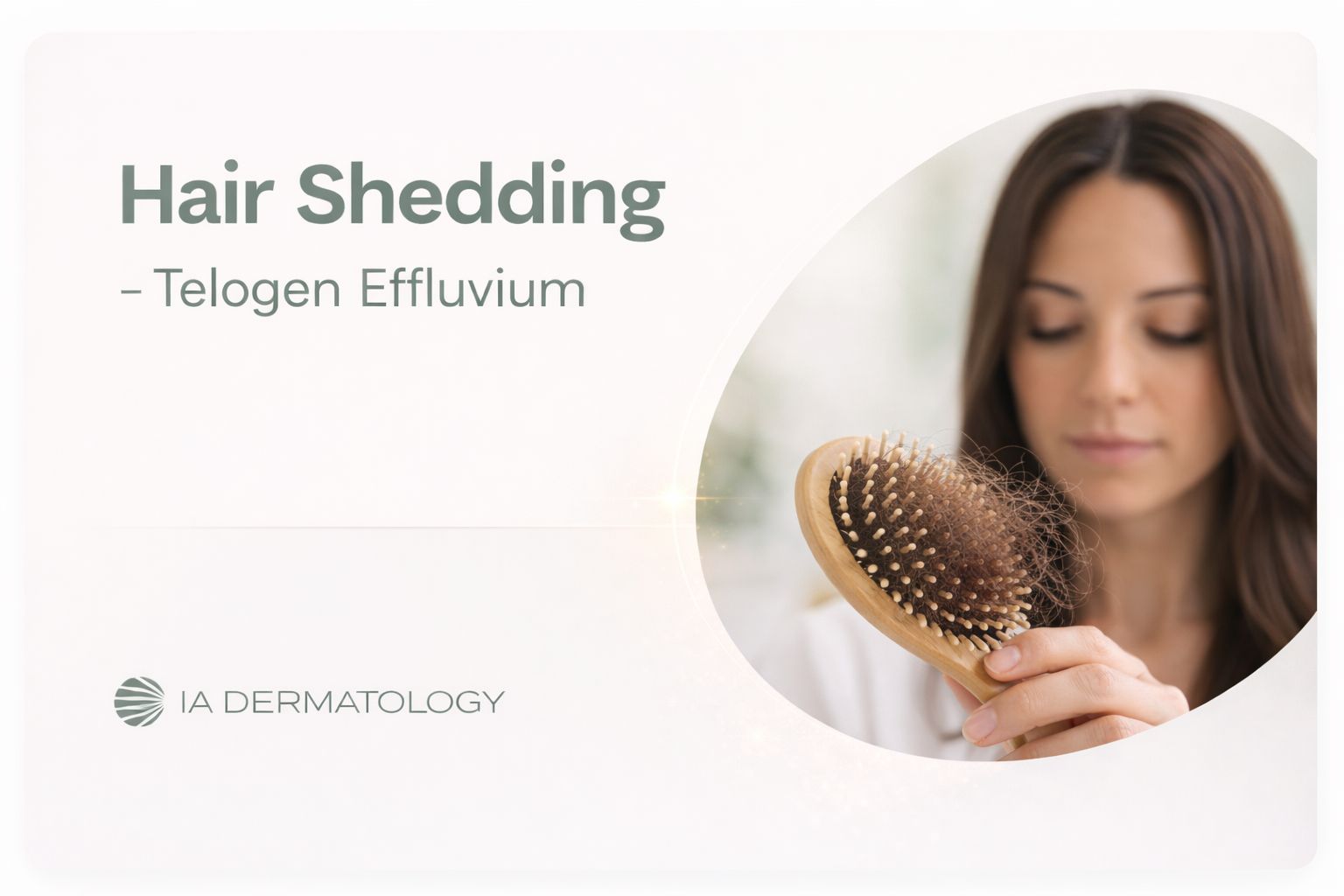
Noticing more hair in your brush or on your pillow can be worrying. In many cases, it’s simply temporary hair shedding.
What Is Hair Shedding?
Hair grows in a natural cycle:
In good health, we shed 50–100 hairs per day, with each follicle cycling independently. However, certain telogens can cause many hairs to enter the same resting phase at once. These hairs are shed together, leading to excess shedding and hair loss. This is known as telogen effluvium.
- Anagen (growth phase): Lasts several years; about 85–90% of your scalp hairs are in this phase at any time.
- Catagen (transition phase): A short 2–3 week stage when the hair follicle begins to shrink.
- Telogen (resting phase): Lasts around 2–4 months; hairs remain in place but no longer grow.
- Exogen (shedding phase): Hairs fall out naturally to make way for new growth.
Our Diagnostic Approach
We guide you with realistic timelines, ongoing monitoring, and emotional support.
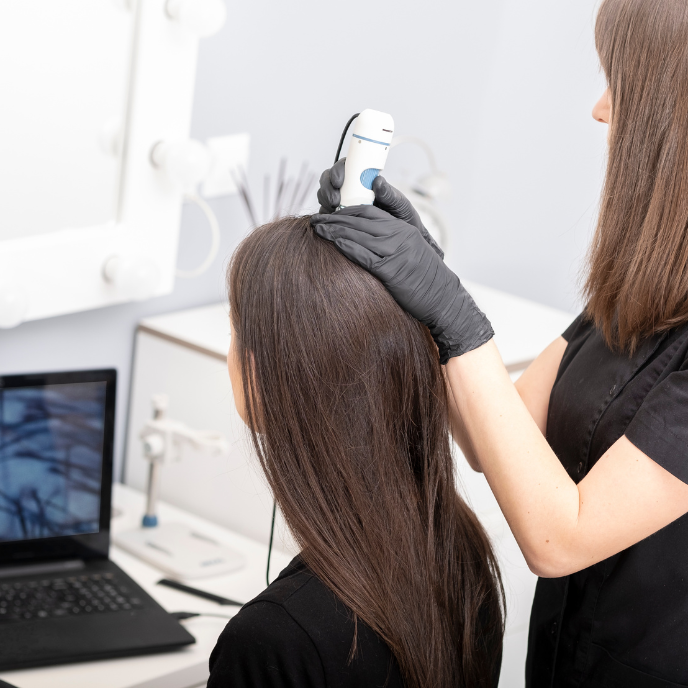
Clinical examination: Dr. Iaisha Ali assesses hair shedding patterns and scalp health.
Trichoscopy: Non-invasive imaging to examine follicles and rule out other alopecias.
Blood tests or Scalp Biopsy whichever is necessary

Personalised plan: Includes lifestyle changes, treatments, and follow-up care.
Common Signs & Symptoms
- Severe illness, high fever, or major surgery.
- Childbirth (postpartum shedding).
- Sudden psychological stress (e.g., divorce, job loss, caring for a sick loved one).
- Rapid weight loss or nutritional deficiencies.
- Stopping certain medications or hormonal treatments (e.g., birth-control pills).
- Some medications (e.g., high-dose vitamin A, certain antidepressants).
Excessive shedding typically begins 2–3 months after the trigger and may last 3–6 months before resolving.
How Is Hair Shedding Different from Hair Loss?
Hair shedding (telogen effluvium):
- Temporarily, the follicle is intact and capable of regrowing hair.
- Global loss of hair throughout all regions of the scalp
- No inflammation of the scalp or hair
- Often linked to a recent life event or illness.
- Usually self-limiting and resolves within 6–9 months.
Hair disorders:
- Gradually progressive loss of hair density
- can be in a patterned distribution or discrete
- A genetic component may be present
- May be associated with scalp or hair follicle inflammation
If you’re unsure whether you’re shedding or losing hair permanently, see a dermatologist. An examination of your scalp and simple tests can help confirm the cause.
What To Expect with Hair Shedding
- In most cases, shedding slows and stops on its own once the trigger has resolved.
- Hair density usually returns to normal within 6–9 months, though regrowth may initially appear finer.
- If the stressor remains (e.g., ongoing illness, chronic stress), excessive shedding can persist.
Get Started with Hair Shedding Recovery Journey
At IA Dermatology, Dr. Iaisha Ali can determine whether you’re experiencing hair shedding or a more serious form of hair loss. Early intervention is key when underlying hair loss is present.
“Dr Iaisha Ali is very friendly and takes time to understand my concerns, tailoring treatments to address expertly. I have been a Client for over 6 years and would have no hesitation in recommending.“
✅ Verified Patient Review from Doctify
Visited for Scarring Hair Loss
FAQs